Pass-Through
Tax Treatment
Business income generally passes through to shareholders for federal tax purposes.

S-Corporation Election, Done Right.
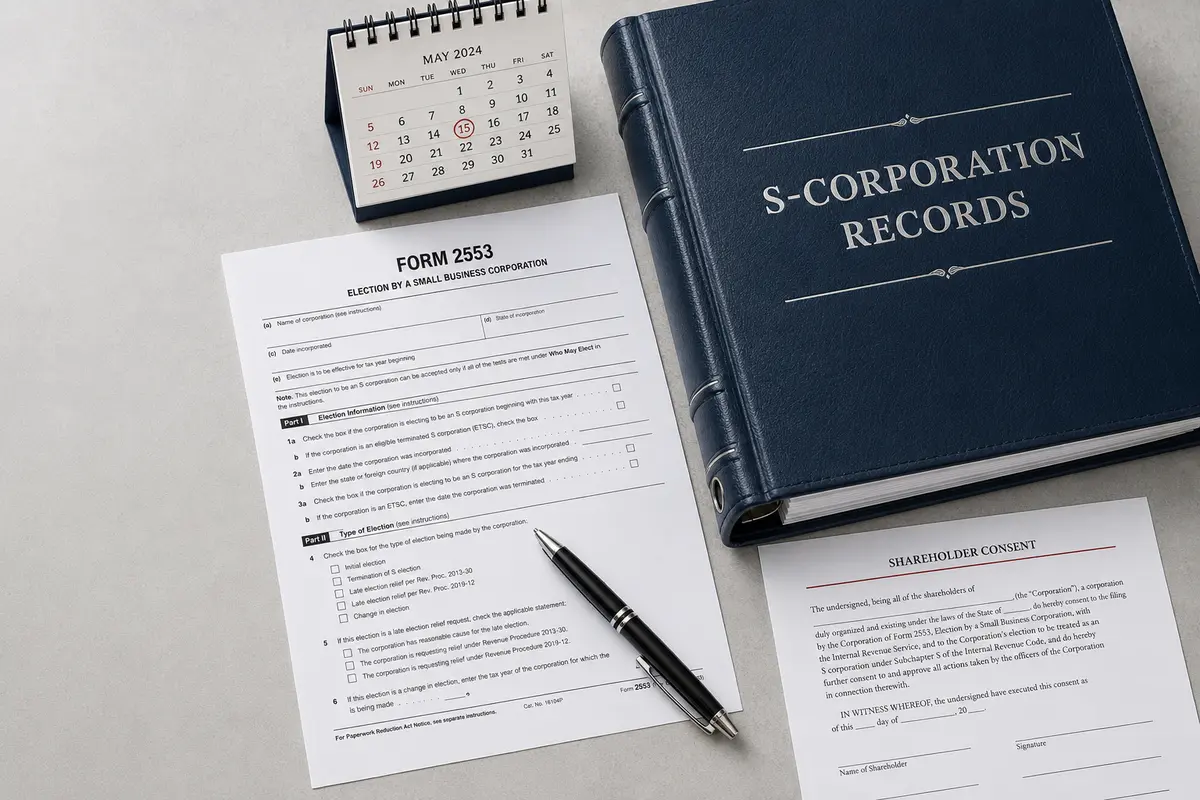
We coordinate eligibility review, Form 2553 preparation, shareholder consent, election timing, and payroll readiness with qualified tax professionals.
Business income generally passes through to shareholders for federal tax purposes.
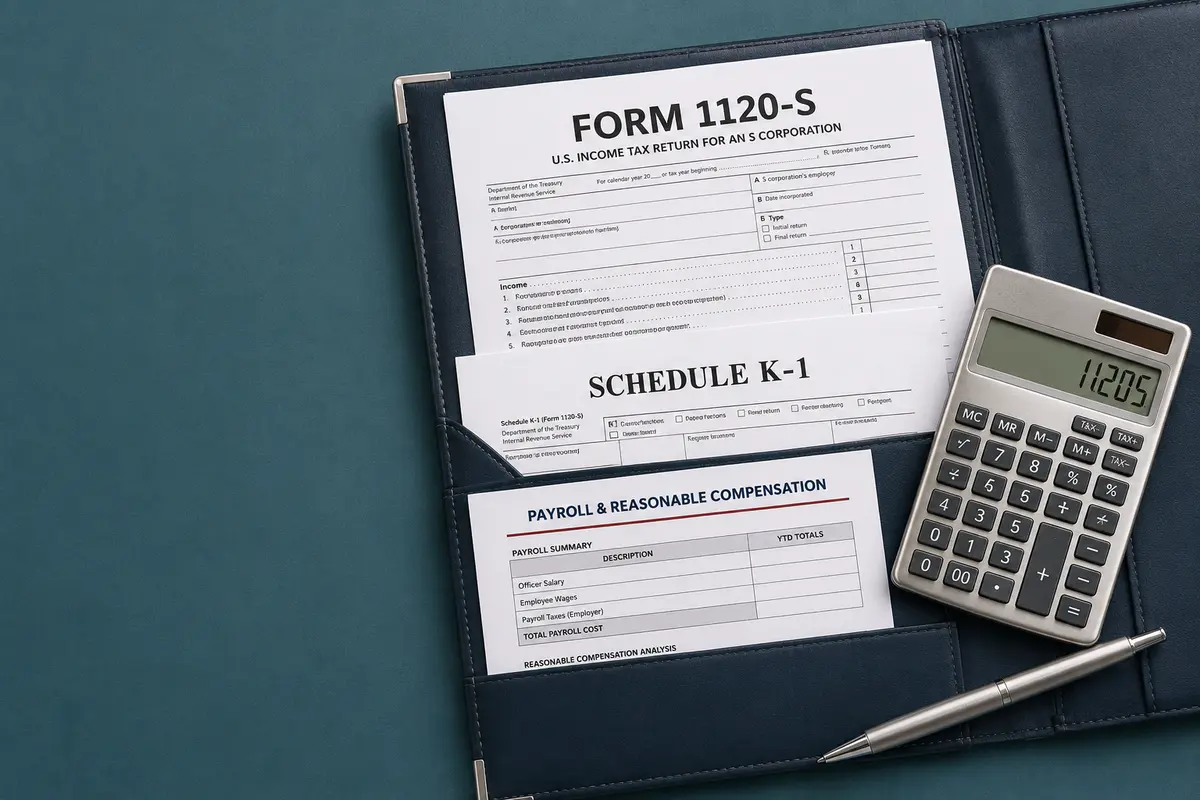
Coordinate payroll and reasonable-compensation planning with qualified professionals.
The underlying corporation or eligible LLC remains the legal business entity.
Stay prepared for Form 1120-S, shareholder reporting, payroll, and compliance deadlines.
Review entity type, shareholder count, ownership, and other threshold requirements.
Coordinate completion of the federal election form and required entity information.
Organize the information and signatures required from all eligible shareholders.
Coordinate the requested effective date and applicable filing window.
Identify when professional review of available late-election relief may be appropriate.
Coordinate tax-return, shareholder-reporting, and payroll setup with qualified professionals.

Consider S‑Corporation treatment for an existing corporation or eligible LLC.

S‑Corporation shareholder rules are narrower than C‑Corporation ownership rules.
Verify that the corporation or eligible LLC can make the federal election.
Check ownership eligibility, shareholder count, and consent requirements.
Review the desired tax year and the applicable filing window.
Complete Form 2553 and coordinate all required signatures.
Submit the election and prepare for payroll, Form 1120-S, and ongoing reporting.
One team organizes election timing, documentation, signatures, and professional referrals.
Access independent CPAs, tax professionals, payroll providers, and attorneys when needed.
Clear attention to ownership restrictions and shareholder-consent requirements.
Continued coordination for payroll, tax-return readiness, banking, and compliance.
It is a federal tax election made by an eligible corporation or other eligible entity using IRS Form 2553. It does not create a separate state-law entity.
An eligible LLC may be able to elect treatment as an S corporation for federal tax purposes. Entity classification and tax consequences should be reviewed with a qualified tax professional.
The IRS generally requires filing no more than two months and 15 days after the beginning of the tax year the election is intended to take effect, or during the preceding tax year. Exceptions and late-election relief may apply.
No. IRS eligibility rules do not permit nonresident-alien shareholders. Citizenship and tax-residency status should be reviewed before making the election.
USABA provides business consulting and coordination and can connect clients with independent legal and tax professionals when specialized advice is needed.
Let our team coordinate eligibility review, Form 2553, signatures, timing, and professional support.